
Fall protection training needs to prepare workers for the hazards and systems they will encounter. The construction rule requires a program for every employee who might be exposed to fall hazards, enabling them to recognize those hazards and understand the procedures used to minimize them. 1926.503(a)(1)
The same section identifies the trainer's required expertise, the written record and situations requiring retraining. Use all of those elements when reviewing the training process for the work your crew performs.
This article is general information, not legal advice.
Begin With The Actual Fall Hazards
Identify where workers may encounter a fall exposure and which protection the task uses. A walking-surface edge, a roof activity and access around a hole can raise different questions. The training discussion needs the actual location and the system involved.
Our construction fall protection guide explains the broader protection rules. The guardrail guide and hole-cover guide provide related system requirements.
Use that information to organize instruction around the worker's assignment. The person conducting training needs to know what the crew will do, what protection will be used and how work may change in the area.
Who Conducts The Training?
The employer must ensure employees are trained, as necessary, by a competent person qualified in the areas listed in the rule. Those areas include the nature of fall hazards and the correct procedures for the protection systems being used. 1926.503(a)(2)
Read that task-specific requirement in full. The trainer needs the knowledge to cover the relevant hazards, systems and procedures. A title alone does not explain that capability.
The competent and qualified person guide explains the general definitions and examples of duties assigned by construction standards. Keep the training responsibility tied to the specific work and the subjects required here.
What The Program Must Cover
The listed training areas include fall hazards in the work area; erecting, maintaining, disassembling and inspecting protection systems; and using the protection involved. The rule identifies guardrails, personal fall arrest, safety nets, warning lines, safety monitoring, controlled access zones and other protection as applicable. 1926.503(a)(2)(i) Through (iii)
It also covers employee roles in safety monitoring, limitations on mechanical equipment during low-slope roofing, handling and storing equipment and materials, overhead protection, employee roles in fall protection plans and the Subpart M standards. 1926.503(a)(2)(iv) Through (viii)
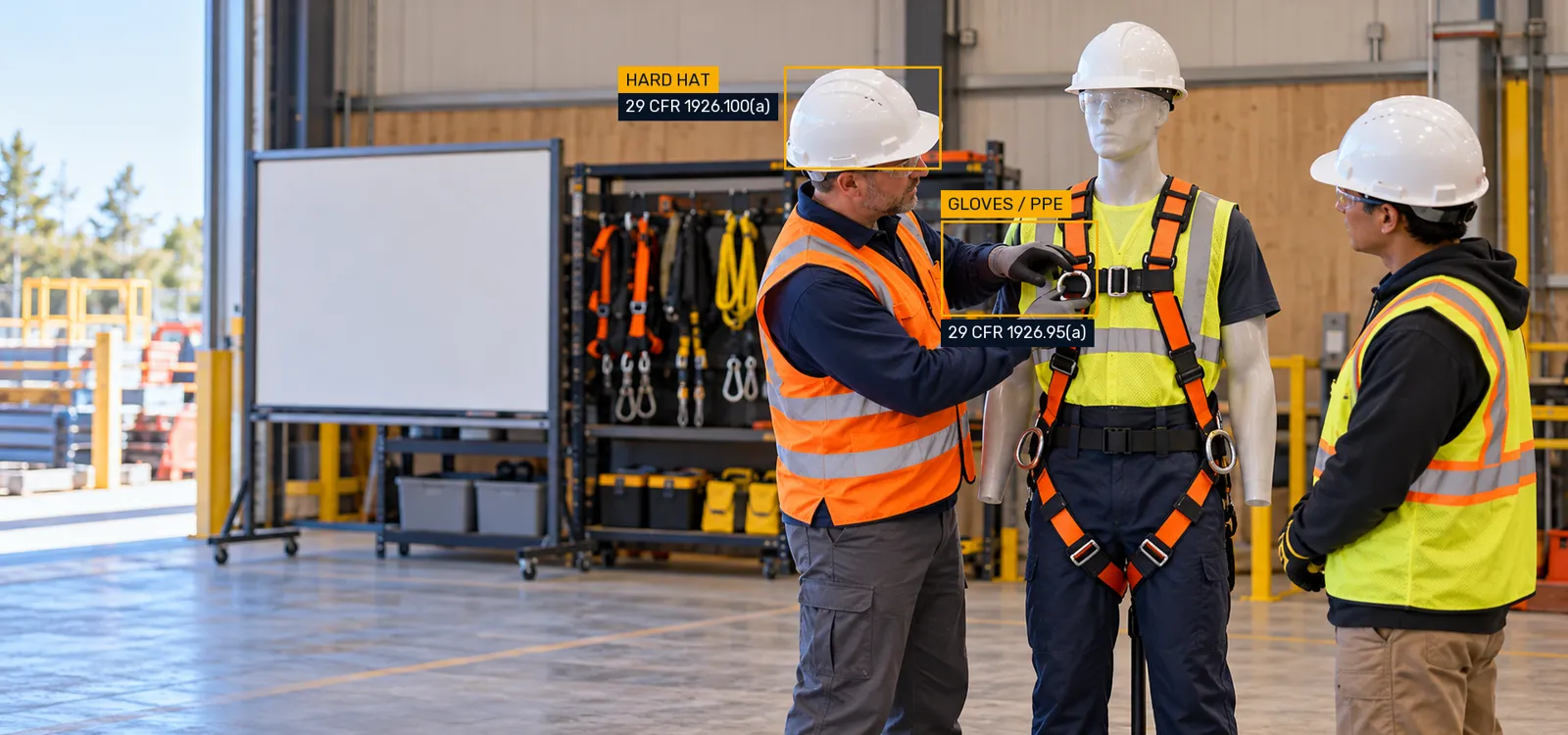
Use those subjects to check the training plan for the actual assignment. Explain the system and the worker's role in it. Give workers an opportunity to identify unclear instructions before they enter the exposure.
Prepare The Written Training Record
The employer verifies the required training through a written certification record containing the employee's name or other identity, the training date or dates, and the signature of the trainer or the employer. The latest training certification must be maintained. 1926.503(b)(1), (2)
Keep the record connected to the person and training it documents. A file that cannot be matched to the worker or the relevant instruction is difficult for the team to use when the assignment changes.
| Required Record Element | What To Identify |
|---|---|
| Employee | Name or other identity of the person trained |
| Timing | Date or dates of training |
| Signature | Trainer's signature or employer's signature |
| Current record | The latest training certification |
Source: 1926.503(b). The table reflects the rule's elements; it does not prescribe a particular software or form.
Review Training From Another Employer
If the employer relies on training conducted by another employer, the written record must identify the date the current employer determined that training was adequate, instead of the original training date. The provision also addresses training completed before the section's effective date. 1926.503(b)(1)
Make that adequacy review specific to the work being assigned. Identify what the worker learned and whether it addresses the systems and conditions involved now. Record the determination as the rule requires.
Keep the person handling training records informed when workers move between projects. The receiving team needs a clear explanation of the training being relied upon and any additional instruction needed for its work.
Recognize Retraining Triggers
Retraining is required when the employer has reason to believe an affected employee no longer has the understanding and skill required by the program. The listed circumstances include workplace changes making earlier training obsolete, changes in systems or equipment making it obsolete, and gaps in knowledge or use showing the worker has not retained the needed skill. 1926.503(c)(1), (2), (3)
Review the reason for the gap and the instruction needed. A different system or changed work arrangement may need a focused discussion with the trainer. A worker's uncertainty about the current procedure also needs attention before the team assumes the earlier instruction still fits.
The provision identifies these triggers; it does not substitute a single recurring calendar interval for evaluating understanding and changes in the work.
Keep Outreach Training Separate From This Requirement
OSHA states that its Outreach Training Program provides general safety orientation and does not fulfill training requirements in individual standards. OSHA Outreach Program Overview
Our OSHA 10 versus OSHA 30 guide explains those courses and completion cards. Use the fall protection training rule to identify the instruction and records needed for the actual task.
Frequently Asked Questions
What must a fall protection training record contain?
The written record needs the trained employee's name or other identity, the training date or dates, and the trainer's signature or the employer's signature. The employer must maintain the latest training certification. A different date rule applies when relying on training from another employer. 1926.503(b)
Does OSHA require retraining only when equipment changes?
No. The rule also addresses workplace changes that make earlier training obsolete and gaps in a worker's knowledge or use that show the required understanding or skill has not been retained. The employer must retrain when it has reason to believe that understanding or skill is lacking. 1926.503(c)
Can video observations help focus a training discussion?
A visible condition can give the safety team a specific task to examine with workers. Identify the hazard, the protection involved and the procedure the crew needs to understand. Keep the instruction with the competent trainer and the employer's training process. Footage checks support the review of site conditions.
Where Osha Ask Helps
Osha Ask reviews job site video and photos and checks what it sees against OSHA requirements. It flags hazards and missing safety measures so your safety team can act on them sooner. Missing guardrails or visible fall protection concerns can prompt a closer review of the work and the relevant requirement.
AI helps your safety team see more; your people still make the call.
Explore the construction safety guide, OSHA compliance software and AI video safety monitoring.
Osha Ask is an independent software product and is not affiliated with OSHA or the U.S. Department of Labor.