A hard hat and a vest do not answer every PPE question. The equipment needs to match the hazard, fit the person and remain usable throughout the task. A crew changing from material handling to cutting may need a different combination of protection even when it stays in the same work area.
OSHA's construction PPE provisions are in 29 CFR 1926 Subpart E. The general criteria require protective equipment where workplace hazards make it necessary, maintained in a sanitary and reliable condition. 1926.95(a)
This article is general information, not legal advice.
Start With The Task And Exposure
Describe what can reach the worker: falling material, flying particles, splashes, noise or airborne contaminants. Then establish the protection required for that exposure. A general site dress code can be useful, but the selection discussion still needs the work being performed and the equipment being used.
The general PPE rule covers hazards affecting the eyes, face, head, extremities and body through contact, inhalation or absorption. Its scope includes protective clothing, respiratory devices, shields and barriers. 1926.95(a)
Include adjacent trades in this review. A worker carrying materials through an area may encounter particles from someone else's operation. The person selecting protection needs to understand that shared exposure, not just the job title on the crew list.
Proper Fit Is An Explicit Construction Requirement
Employers must ensure PPE is safely designed and constructed for the work and selected to fit each affected employee properly. OSHA's clarified construction fit requirement took effect January 13, 2025. 1926.95(c), OSHA Construction PPE Rule
Make fit part of issuing equipment. Ask the worker to describe pressure points, slipping, restricted movement or interference with other equipment. Different sizes and designs may be needed across a crew. An item can look present while still fitting poorly.
OSHA explains that the rule addresses the risk of ill-fitting PPE, including the difficulties some smaller workers face with standard sizes. OSHA Proper-Fit FAQs
Check combinations, too. Consider how eye protection, hearing protection and head protection sit together during the task. Make it easy for workers to report a fit problem and get the issue resolved before the equipment becomes something they avoid wearing.
Head Protection Depends On The Hazard
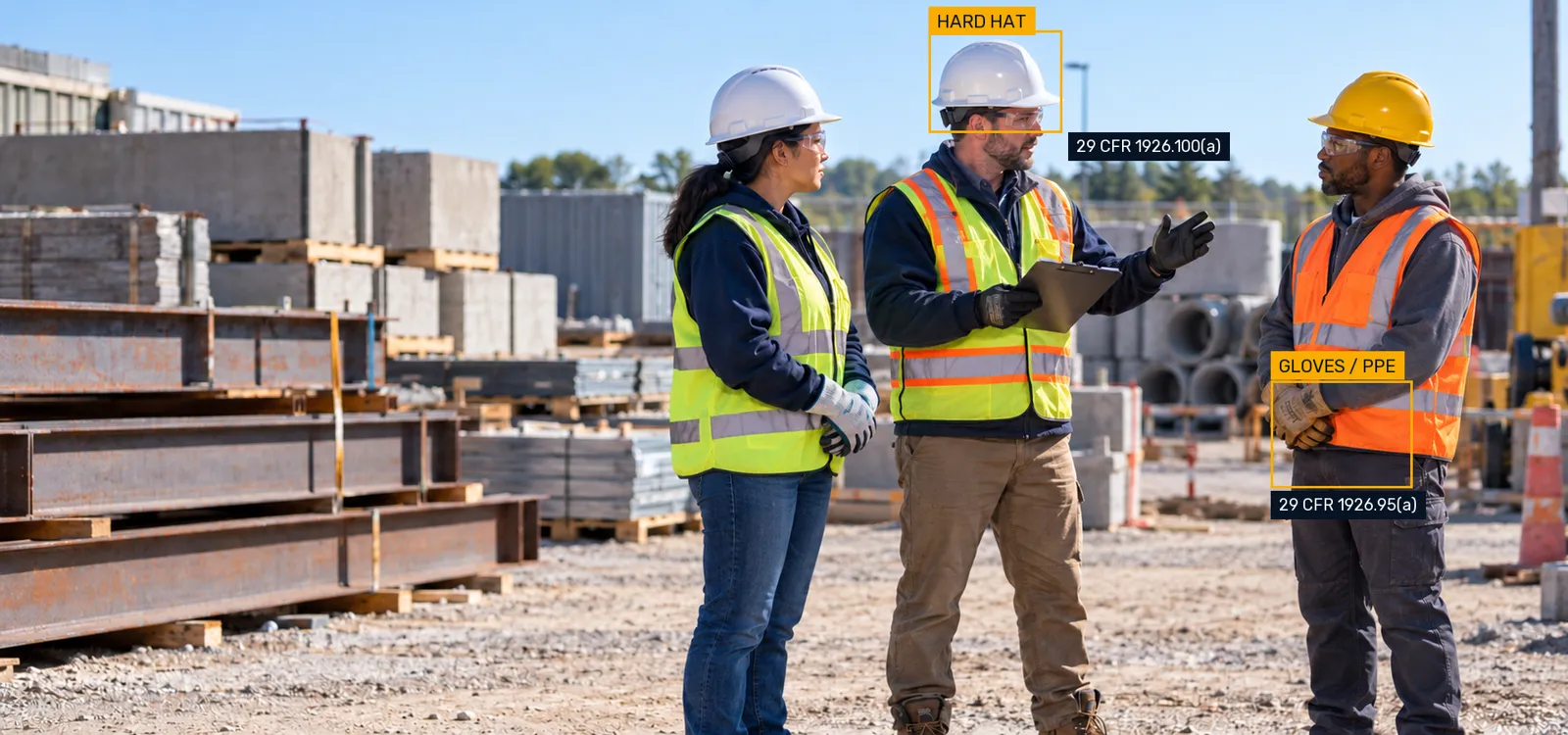
Protective helmets are required where there is a possible danger of head injury from impact, falling or flying objects, or electrical shock and burns. Head protection for high-voltage electrical shock and burns must also meet the electrical-insulation specifications identified in the standard. 1926.100(a), (b)(2)
The practical question is more specific than whether someone owns a hard hat. Which exposure applies here, and is this helmet suitable for it? Keep the product information available to the person selecting the equipment. Appearance alone does not establish electrical protection.
Revisit the selection when the assignment changes. A worker moving from one area to another may face different overhead work, material movement or electrical exposure. Include those changes in the handoff between supervisors.
Read the construction hard hat requirements for head-protection selection and use.
Eye And Face Protection Must Match The Exposure
Affected employees need appropriate eye or face protection for flying particles, molten metal, liquid chemicals, acids or caustics, chemical gases or vapors, and harmful light radiation. Flying-object hazards require eye protection with side protection. 1926.102(a)(1), (2)
Workers who wear prescription lenses need protection incorporating the prescription or protection worn over their lenses without disturbing either set's position. The standard also calls for protection suited to the particular hazard, with proper fit and reasonable comfort under the designated conditions. 1926.102(a)(3), (5)
Use the operation to drive the discussion. Cutting, chemical handling and welding raise different selection questions. Avoid a single generic instruction that leaves the worker deciding whether ordinary eyewear is enough. Include the equipment instructions and the hazard information in that decision.
Hearing Protection Follows The Noise Review
Where noise exceeds the levels in Table D-2, feasible engineering or administrative controls must be used. If those controls do not reduce exposure within the table's levels, appropriate PPE must be provided and used. 1926.52(a), (b)
The hearing-protection rule requires protective devices where reducing the noise or exposure duration to those levels is not feasible. Inserted ear protectors must be fitted or individually determined by competent persons. Plain cotton is not acceptable hearing protection. 1926.101
Plan the review around where people actually work. A worker beside a noisy operation may need consideration even while performing a different task. Keep the exposure assessment and selection process with the people responsible for the site's hearing protection arrangements.
Respirators Need More Than A Visible Mask
OSHA's respiratory protection standard applies to construction. It requires selection based on the respiratory hazard and relevant workplace and user factors, with a respiratory protection program where respirators are necessary or required by the employer. 1910.134(c), (d)
A medical evaluation is required before fit testing or required workplace use. Tight-fitting facepiece respirators need fit testing before initial use, when a different facepiece is used and at least annually afterward. 1910.134(e)(1), (f)(2)
The selection process needs the actual contaminant and exposure information. A camera view of a face covering cannot establish that the selected respirator, medical evaluation or fit testing meets the applicable requirements. Keep those program checks in the on-site safety process.
High Visibility And Fall Protection Have Their Own Rules
For excavation work, employees exposed to public vehicular traffic must receive and wear warning vests or other high-visibility garments. That specific requirement should not be rewritten as a universal rule that every person everywhere must wear the same vest. 1926.651(d)
Fall protection needs a separate review of the task and applicable provision. For unprotected walking or working surface edges six feet or more above a lower level, the rule calls for guardrails, safety nets or personal fall arrest systems. A harness by itself does not describe the complete system. 1926.501(b)(1)
Use our construction fall protection guide for that wider discussion and the construction electrical safety guide for temporary-power questions.
Who Pays For Required PPE?
The general rule is employer payment for PPE used to comply with Part 1926, with specified exceptions. These include certain non-specialty safety-toe footwear and prescription safety eyewear permitted off site, everyday clothing and ordinary weather-protection items. Replacement PPE is generally employer-paid, except when lost or intentionally damaged by the worker. 1926.95(d)
Put the site's issue and replacement process in plain language. Workers should know where to get equipment, how to report damage and who can resolve a fit problem. That helps keep a purchasing question from turning into an equipment gap at the start of work.
Review PPE As The Work Changes
Use a short planning list:
- Identify the task and everyone exposed nearby.
- Select the protection for that exposure.
- Check fit and compatibility with other equipment.
- Establish who supplies and replaces it.
- Explain the issue-reporting process to the crew.
- Revisit selection when the task or area changes.
For example, a crew may begin with material staging and later move to cutting in the same room. Review the new particle and noise exposure before the transition. The location has stayed the same; the protection questions have changed.
Pair that review with the construction safety compliance checklist so PPE stays connected to access, equipment and the surrounding work.
Where Osha Ask Helps
Osha Ask reviews job site video and photos and checks what it sees against OSHA requirements. It flags hazards and missing safety measures so your safety team can act on them sooner. Missing hard hats or eye protection in a visible work area can prompt a closer review of the exposure and the protection in use.
AI helps your safety team see more; your people still make the call.
See OSHA compliance software and AI video safety monitoring. Book a demo to see Osha Ask check job site footage.
Osha Ask is an independent software product and is not affiliated with OSHA or the U.S. Department of Labor.