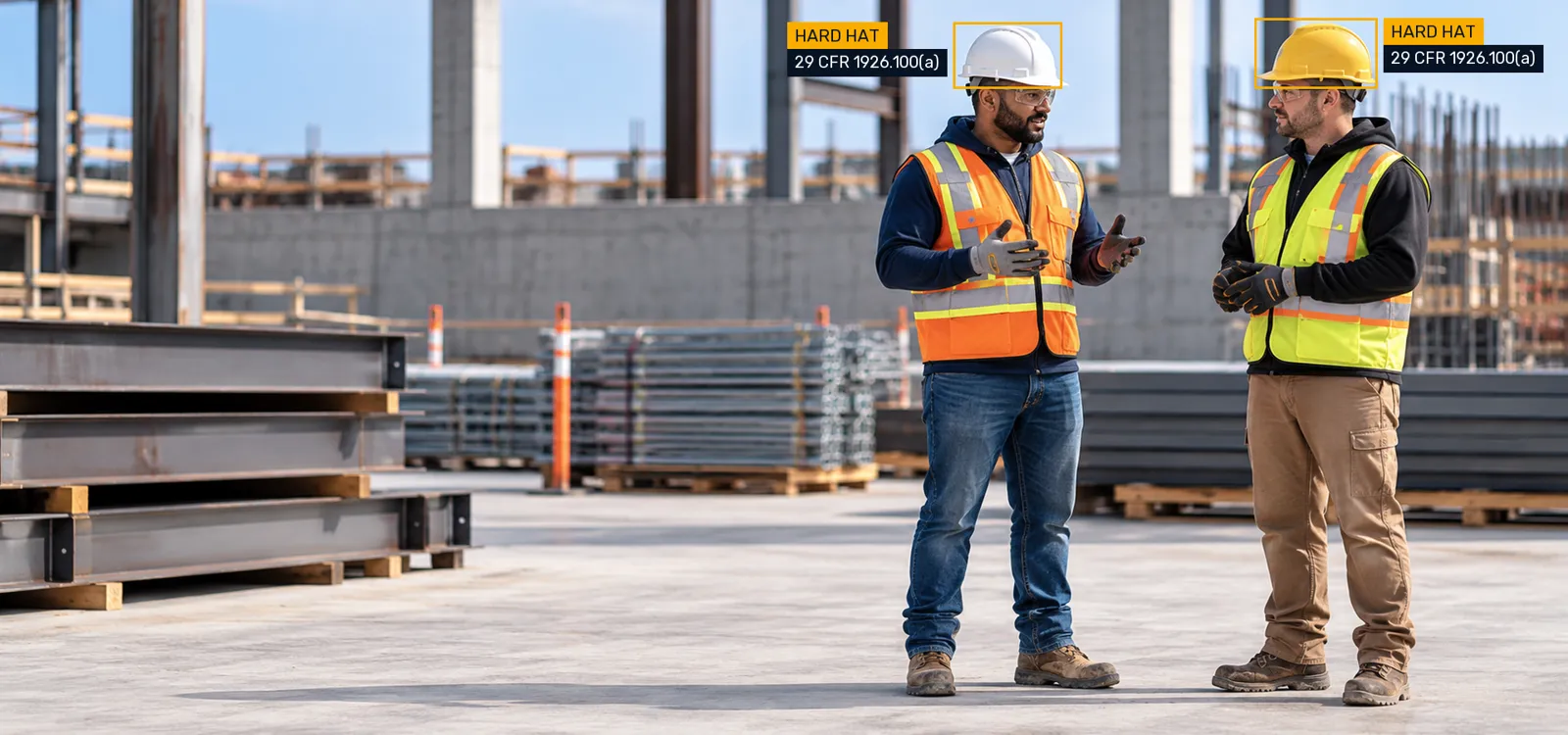
OSHA requires protective helmets where construction workers face possible head injury from impact, falling or flying objects, or electrical shock and burns. The requirement follows the exposure in the work area. Selecting head protection also means checking its suitability, fit and condition. 1926.100(a)
A hard hat visible on a worker is only part of the review. The safety team needs to know what the worker could encounter, whether the protection matches that hazard and whether it is being used as intended.
This article is general information, not legal advice.
When Is Head Protection Required?
Start with the task and the surrounding activity. Look for overhead work, material movement, fixed objects a worker could strike and electrical exposure. Include workers passing through the area as well as those performing the main operation.
The construction rule does not make the decision depend on whether an injury has already happened. It addresses the possible danger of head injury from the listed exposures. 1926.100(a)
Make the protection arrangements clear before the crew starts. Identify the relevant area, the work happening nearby and who can answer a question about the equipment. A general site rule can help communicate expectations, while the selection process still needs the actual hazards.
Select Protection That Meets The Standard
Section 1926.100(b)(1) identifies the ANSI Z89.1 consensus standards the employer can use for head protection. Paragraph (b)(3) also recognizes devices the employer demonstrates are at least as effective as devices constructed under those listed standards. 1926.100(b)(1), (3)
Keep the product information available during selection. The person choosing the equipment needs the manufacturer's description of the protection, limitations and intended use. A helmet's color or style does not establish its protective performance.
Use the equipment information for the actual task. If the exposure changes, review the selection again. The worker who moves from one area to another may encounter different overhead activity or electrical hazards.
Electrical Exposure Needs The Right Protection
For workers exposed to high-voltage electrical shock and burns, the employer must also ensure the head protection meets the electrical-insulation specifications in Section 9.7 of a consensus standard listed in the rule. 1926.100(b)(2)
Treat that as a specific selection question. Ask which electrical exposure applies and which equipment information supports the choice. Do not infer electrical protection from the presence of a hard shell or from a general label used by the crew.
Keep the review with the people responsible for the electrical work and PPE selection. Our construction PPE guide explains how protection choices fit the wider review of the task and exposure.
Check Fit And Compatibility
Construction PPE must be safely designed for the work and selected to fit each affected employee properly. That applies to the equipment being issued, not an assumed standard size for everyone on the crew. 1926.95(c)
OSHA's head-protection bulletin recommends checking for a comfortable, secure fit and adjusting the suspension for a snug fit without excessive pressure. It also recommends checking compatible accessories such as face shields and hearing protection. OSHA Head Protection Bulletin
Ask the worker about movement, pressure and interference during the task. A fit problem needs a practical response through the equipment-issue process. Workers should know whom to contact when the equipment slips, becomes uncomfortable or interferes with another protective item.
Inspect, Care For And Replace Head Protection
Follow the manufacturer's instructions for the specific helmet, suspension and accessories. OSHA's bulletin recommends inspecting the shell for cracks or dents, the suspension for wear and secure attachment, and interior cushioning where present. It directs users to manufacturer guidance for service life and removal from use. OSHA Head Protection Bulletin
The bulletin says head protection should be discarded after an impact or when damage or degradation is present. Service life depends on factors including storage, handling, use and harsh environmental exposure. OSHA Head Protection Bulletin
Keep the replacement process clear. A worker reporting damaged equipment needs to know how to obtain suitable protection before returning to the exposure. Retain the product instructions so the responsible person can check the appropriate care and replacement guidance.
Hard Hats Work Alongside Falling-Object Controls
Where workers are exposed to falling objects, the employer must require hard hats and implement one of the protective measures in 1926.501(c). These include preventing objects falling through toeboards, screens or guardrails; a canopy with material kept back from the edge; or barricading the fall area, keeping workers out and setting material back. 1926.501(c)(1), (2), (3)
Review the overhead work and the area below together. Identify where tools or materials could fall and how the selected control protects people. The head-protection decision and the falling-object control are connected parts of that review.
The Focus Four guide explains struck-by hazards alongside falls, caught-in or caught-between hazards and electrocution.
A Short Head-Protection Review
- Identify the task and nearby work that can expose people.
- Select head protection using the hazard and equipment information.
- Check fit and compatibility with the other PPE in use.
- Follow manufacturer instructions for care and replacement.
- Explain how workers report damage or fit problems.
- Review the protection when the activity or area changes.
For example, a crew may finish ground-level work and then enter an area with overhead material handling. Review the exposure and protective arrangements before the move. The PPE question follows the work, even when the employer and crew stay the same.
Where Osha Ask Helps
Osha Ask reviews job site video and photos and checks what it sees against OSHA requirements. It flags hazards and missing safety measures so your safety team can act on them sooner. A visible missing hard hat can prompt a review of the exposure and the protection required for that area.
AI helps your safety team see more; your people still make the call.
Explore OSHA compliance software, AI video safety monitoring and the construction safety guide, or book a demo.
Osha Ask is an independent software product and is not affiliated with OSHA or the U.S. Department of Labor.