A site walk shows what is happening while the reviewer is there. The work continues afterward. Another trade arrives, material staging moves and access routes change. AI in construction safety adds another way to review visible conditions through job site video and photos.
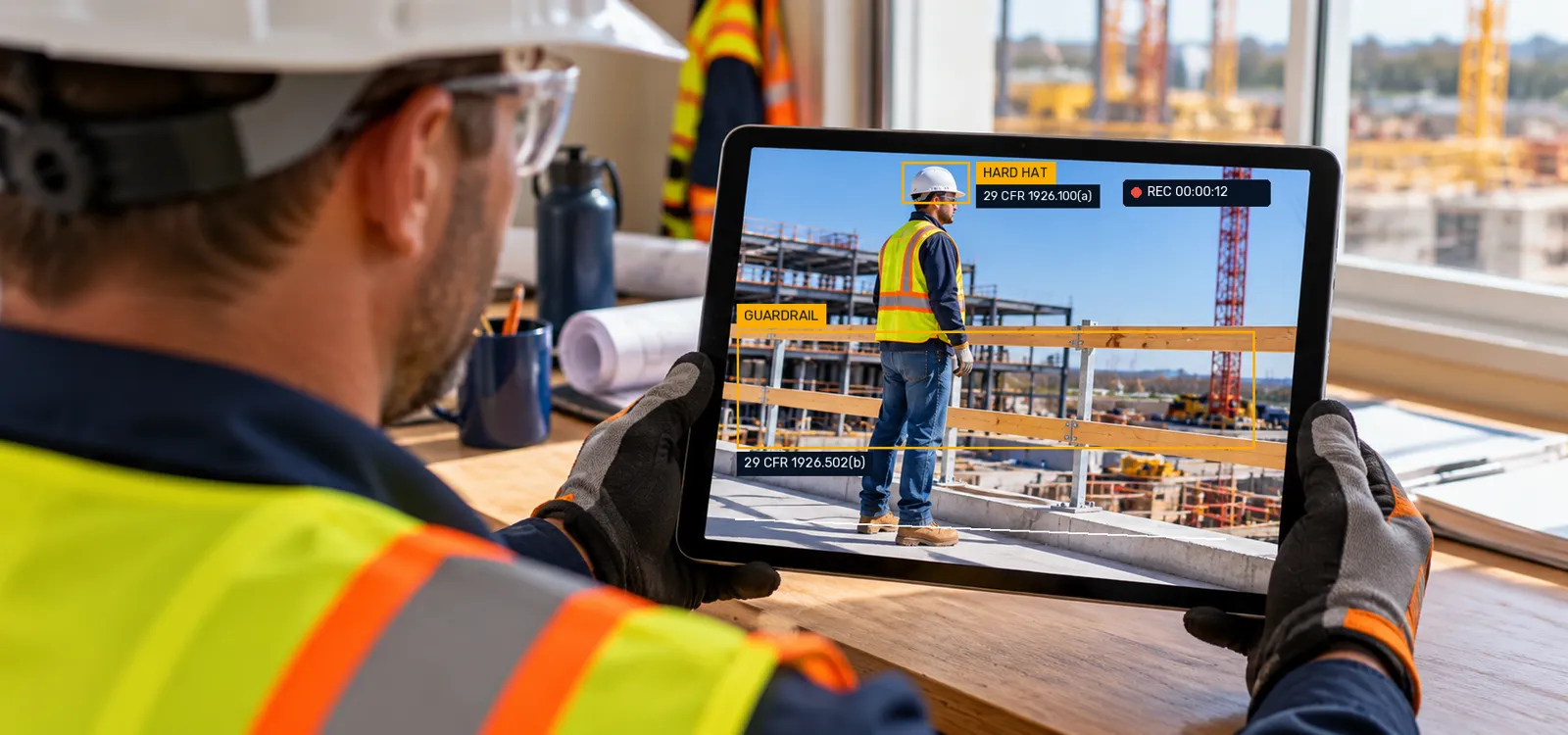
Osha Ask checks that footage against OSHA requirements. It flags hazards and missing safety measures and shows the OSHA rule each condition relates to. Your safety team checks the observation, assesses the work and arranges the response.
The useful starting point is a task your team already manages: edge protection, scaffold access, PPE or a trench operation. A clear review question gives the footage a purpose and makes the next on-site decision easier to identify.
This article is general information, not legal advice.
What AI Can See On A Construction Site Today
Video can show changes in an area as the work progresses. Photos show a condition from a particular viewpoint. Osha Ask reviews visible conditions involving PPE, fall protection, guardrails, holes, scaffolds, ladders, trenches and housekeeping.
The flag is useful because it pairs an observation with the related requirement. The reviewer can examine the rule and the actual task together. Below are examples of the conditions and the OSHA provisions behind them.
PPE At The Point Of Exposure
Footage can show whether visible workers have head or eye protection while work is happening. OSHA requires protective helmets in areas with possible head injury from impact, falling or flying objects, or electrical shock and burns. 1926.100(a)
Affected workers also need appropriate eye or face protection for exposures including flying particles, molten metal, chemical hazards and potentially injurious light radiation. 1926.102(a)(1)
Osha Ask flags visible PPE gaps with the requirement they relate to. The safety team checks the exposure and whether the selected protection fits the task.
Open Edges And Missing Guardrails
An unprotected edge gives the reviewer a location to examine. For walking or working surfaces with an unprotected side or edge six feet or more above a lower level, OSHA requires guardrails, safety nets or a personal fall arrest system. 1926.501(b)(1)
Guardrail top rails generally must be 42 inches, plus or minus three inches, above the walking or working level. Midrails, when used, sit midway between the top edge and that level. 1926.502(b)(1), (2)
Osha Ask flags missing or visibly incomplete protection. The responsible person verifies dimensions, the applicable provision and the complete protection arrangement on site.
Holes In Walking Or Working Surfaces
Footage can show a hole, skylight or gap in the protection around it. Workers need protection from falling through holes, including skylights, more than six feet above a lower level through covers, guardrails or personal fall arrest systems. 1926.501(b)(4)(i)
Osha Ask flags visible missing protection so the team can check the condition. The review needs the actual opening and activity, including who works near it and what materials move through the area.
Scaffolds And Access
A view of a scaffold can show access arrangements and visible protection around the platform. Workers on scaffolds more than ten feet above a lower level must be protected from falling, with the required method depending on the scaffold type. 1926.451(g)(1)
When the platform is more than two feet above or below its access point, workers need a suitable access method. Cross braces cannot serve as access. 1926.451(e)(1)
Osha Ask flags visible scaffold and access concerns with their related requirements. The team's inspection addresses the scaffold itself and the work being performed.
Ladders At Upper Landings
Video and photos can show how a ladder meets a landing and how the access area is arranged. Portable ladders serving an upper landing need side rails at least three feet above it. When the ladder's length prevents the extension, the rule specifies securing the top and providing a grasping device. 1926.1053(b)(1)
Osha Ask flags visible ladder issues for review. The responsible person checks the equipment, measurements and access arrangement through the site's safety process.
Trenches And Material At The Edge
Footage can show an excavation area, visible protective measures, access and nearby material. Cave-in protection is required unless the excavation is wholly in stable rock, or is less than five feet deep and a competent person finds no indication of a potential cave-in. 1926.652(a)(1)
Excavated material and equipment need at least two feet of setback, retaining devices or both to protect workers from material falling or rolling in. Trenches four feet or more deep need safe egress within 25 feet of lateral travel. 1926.651(j)(2), (c)(2)
Osha Ask flags visible trench conditions for the team's review. Soil assessment, actual depth and protective-system selection remain part of the competent person's on-site work.
Housekeeping As The Area Changes
Materials and debris may affect routes that were clear earlier. OSHA requires work areas, passageways and stairs to be cleared of debris, including scrap and form lumber with protruding nails. 1926.25(a)
Osha Ask flags visible housekeeping concerns. Review the route people actually use, not only the place where materials were originally intended to be staged.
Fit Video Checks Into The Safety Program
OSHA requires frequent and regular inspections of jobsites, materials and equipment by competent persons designated by employers. A competent person needs hazard-recognition capability and authority to take prompt corrective action. 1926.20(b)(2), 1926.32(f)
Use that structure to decide who reviews footage and who checks each observation. Video helps the team revisit visible conditions. Walk-arounds and task-specific inspections provide the direct assessment needed to decide the response.
Start with one high-risk area the team understands. Establish a clear contact and a practical handoff. Keep the observation tied to its location and time so the responsible person knows which condition needs checking.
Where AI Helps And Where People Decide
AI helps identify visible conditions for review. The safety team determines the task, checks the actual exposure and selects the response. That division makes the review useful without turning a flag into a complete assessment of the site.
Consider a material delivery beside a work route. Footage shows the route becoming obstructed. The reviewer identifies the location; the responsible person checks the affected access and arranges the correction. The team then checks that the intended route is usable.
Keep the review question specific enough to assess afterward. Did the observation identify a condition worth checking? Did it reach the person responsible? What information was needed on site? Those answers help the team improve the process.
Introduce Video Checks Respectfully
Explain the safety purpose before making footage review part of the routine. Tell crews which work area is being reviewed, who examines observations and how they can raise concerns. Establish the site's recording, access and handling arrangements clearly.
OSHA's recommended practices encourage worker participation in operating and improving safety programs. Workers know how the task is performed and can identify conditions outside the view. OSHA Worker Participation
Discuss a practical example together. Show the condition, read the relevant requirement and explain the response process. Use questions from the crew to resolve unclear responsibilities and improve the introduction.
Review Changes Between Trades
A handover is a useful point to revisit the footage. One crew may leave a clear access route while the next introduces equipment, materials or a different exposure. Identify what changes and make sure the receiving supervisor knows which conditions still need checking.
OSHA recommends exchanging hazard and control information among employers before work begins and as conditions change. Use that exchange to decide who receives observations affecting more than one trade. OSHA Communication And Coordination
Keep the handoff specific: the work area, the activity, the condition and the responsible contact. The next crew needs information it can use before starting the task.
Frequently Asked Questions
How is AI used in construction safety?
AI can review visible conditions in job site video and photos and flag hazards for the safety team. Osha Ask checks footage against OSHA requirements and shows the rule each flag relates to. Your people check the work, assess the exposure and decide the response through the site's safety process.
Can AI video checks replace OSHA inspections or a competent person?
No. Video checks support the team's review of visible conditions. OSHA's construction rules require inspections by designated competent persons, whose role includes hazard recognition and corrective authority. Your team still needs the on-site assessments and task-specific checks required for the work. 1926.20(b)(2), 1926.32(f)
What OSHA hazards can Osha Ask flag?
Osha Ask flags visible hazards and missing safety measures involving PPE, fall protection, guardrails, holes, scaffold access, ladders, trenches and housekeeping. Each flag includes the OSHA requirement it relates to. See the AI video safety monitoring overview for the conditions and linked rules behind those checks.
How do AI checks relate to construction safety reports?
Footage observations can help your safety team identify conditions to examine and discuss through its own safety process. Official injury recordkeeping, annual summaries, electronic submissions and direct incident reporting have separate requirements. Our OSHA reporting guide explains those duties and links to the agency's official filing routes.
Where should a construction team start with AI safety checks?
Choose one work area your safety team already reviews closely, such as an edge, scaffold access point or trench operation. Identify who checks flags and how the crew raises questions. Use the construction safety compliance guide to select a topic, then review a few concrete observations together.
See Osha Ask Check Your Site Footage
Osha Ask reviews job site video and photos and checks what it sees against OSHA requirements. It flags hazards and missing safety measures so your safety team can act on them sooner.
AI helps your safety team see more; your people still make the call.
Explore OSHA compliance software or book a demo to see a flagged condition and the related rule on footage from your site.
Osha Ask is an independent software product and is not affiliated with OSHA or the U.S. Department of Labor.